
Insights · LinkedIn
On January 1, some salaried people in California stop qualifying as exempt from overtime.
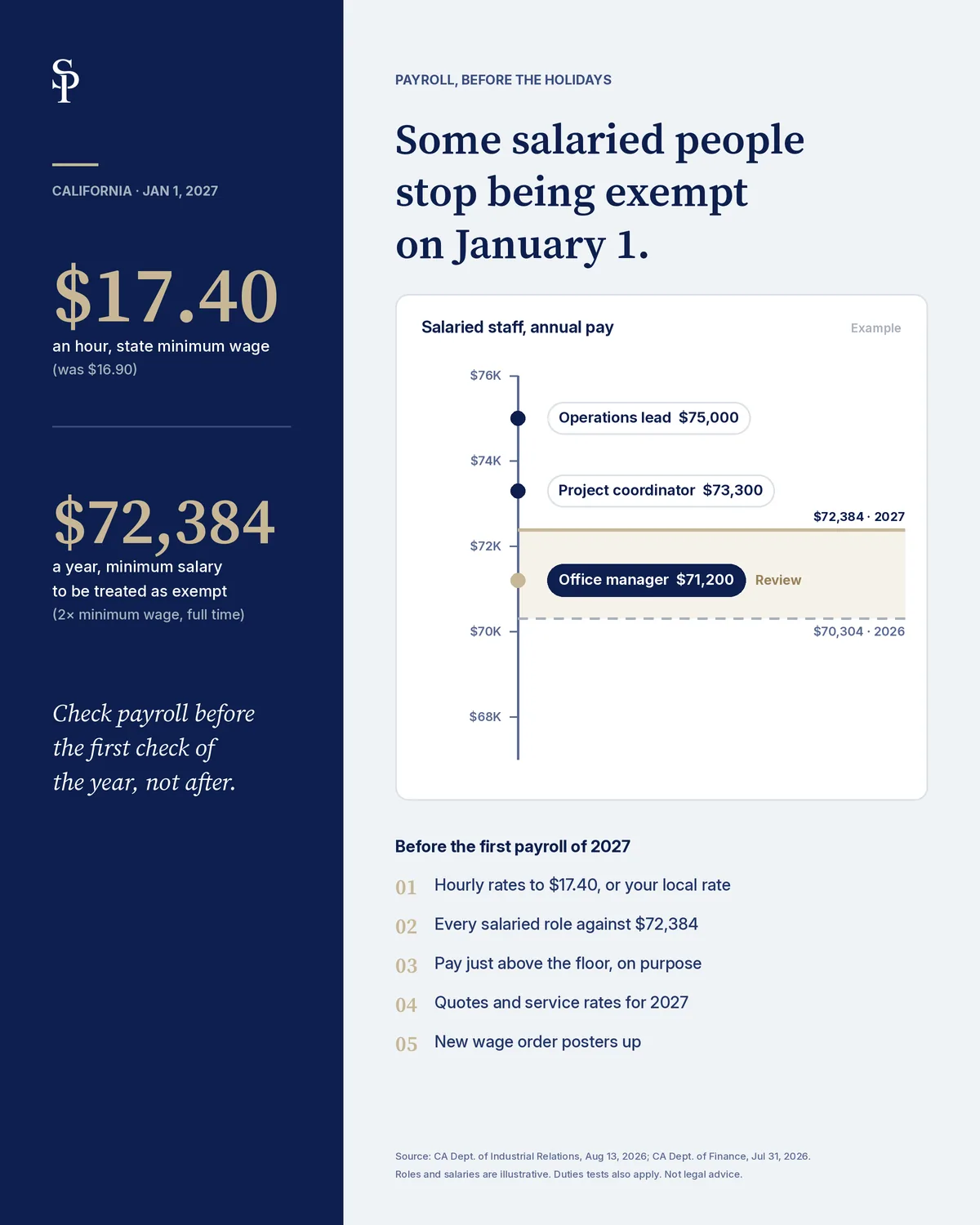
On January 1, some salaried people in California stop qualifying as exempt from overtime.
The state minimum wage goes to $17.40 an hour in 2027. That part gets the headlines.
The quieter part is the salary line. To be treated as exempt in California, an employee has to earn at least twice the state minimum wage for full-time work. Starting January 1, that's $72,384 a year. In 2026 it was $70,304.
So the office manager you pay $71,200 and treat as salaried may need a raise, or overtime pay, starting with the first payroll of the year. And salary alone has never made anyone exempt. The duties test still applies.
A few things worth doing before the holidays eat December:
Update hourly rates to $17.40, or to your city or county rate if it's higher. Some are. Check every salaried role against $72,384. Look at the people paid just above minimum. When the floor rises, the gap between a new hire and a two-year employee shrinks. Decide on purpose whether that's okay. Reprice your quotes and service rates for 2027 now, not in February. Put up the new wage order posters.
None of this is complicated. It just has to be in payroll before the first check of the year, not after.
If you'd like a second set of eyes on it, that's what a local business and technology partner is for. Your payroll provider or employment attorney gets the final word.
sentientpartners.ai